
Choosing the Best Drywall Services in Harrison, NJ: A Homeowner’s Comparison Guide (2026)
- dlopez784
- 3 days ago
- 12 min read
A drywall repair that looks flawless in the humid New Jersey summer can often resemble a roadmap of cracks by mid-winter. You know how frustrating it is to invest in your home only to see settling gaps return or to find fine white dust settled on every surface because of a messy, unprofessional installation. Finding a reliable partner for harrison drywall services shouldn't feel like a gamble, especially when you're dealing with the unique structural shifts and seasonal humidity common across Hudson County.
We understand that you want more than a quick fix; you want a seamless finish that stands the test of time. This guide will show you how to evaluate local repair options to ensure your walls stay smooth and your living space remains clean throughout the process. We will examine the impact of the 2018 International Residential Code on modern standards, discuss the Township of Harrison construction application fee of 1% for permit-required projects, and provide a clear framework for selecting a craftsman who respects your home's environment as much as you do.
Key Takeaways
Learn how regional humidity and the proximity of the Passaic River impact wall expansion, causing recurring cracks in older Harrison homes.
Discover a simple method to identify whether your walls are traditional lath-and-plaster or modern drywall without causing unnecessary damage.
Compare the long-term durability of professional harrison drywall repairs against the hidden time costs and aesthetic risks of DIY projects.
Identify the five critical standards for vetting local contractors, focusing on meticulous dust mitigation and verified references within Hudson County.
Understand why a systematic 4-step repair process is the necessary foundation for high-quality finishes like wallpaper removal or premium interior painting.
Table of Contents
Understanding Drywall Challenges in Harrison, NJ Homes
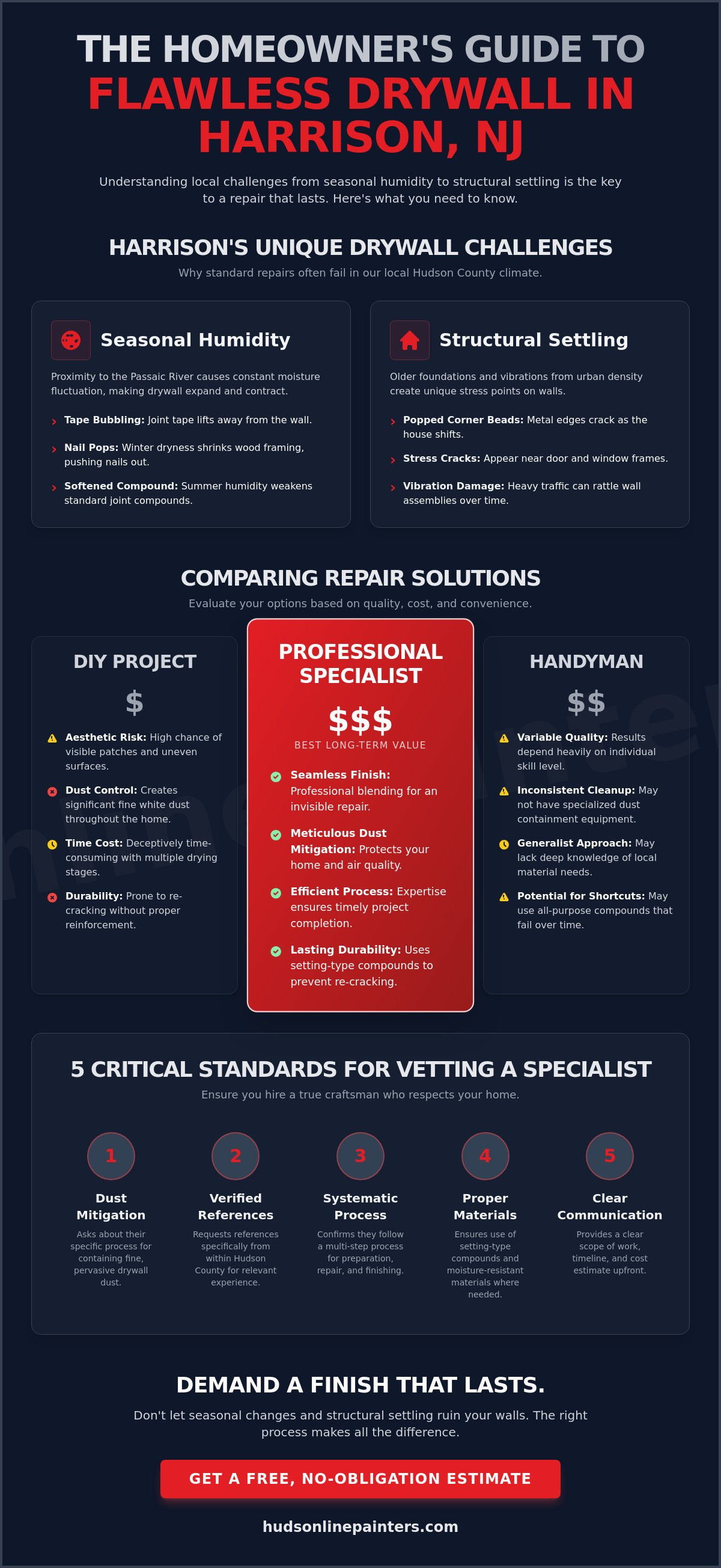
Harrison's unique geography plays a significant role in the health of your home's interior. Living near the Passaic River means your property is subject to higher ambient moisture levels than inland areas. This constant fluctuation in humidity causes gypsum panels to expand and contract. When you are Understanding Drywall as a material, you realize it's a porous substance that reacts to its environment. In our local climate, this porosity often leads to "tape bubbling," where the paper joint tape pulls away from the wall. If you don't address these environmental factors during the repair phase, even the most expensive harrison drywall installation will eventually show signs of failure.
Older homes in the area often feature metal corner beads that were installed decades ago. These components are prone to "popping" or cracking at the edges as the house settles into the Hudson County soil. In multi-family units, these issues are often compounded by vibrations from heavy local traffic and the high-density nature of our neighborhoods. A simple patch isn't enough to fix these problems. You need a repair strategy that accounts for the structural rhythm of the building and the specific stressors of urban living.
The Role of NJ Seasonal Humidity
Harrison summers are notoriously humid. This heavy moisture saturates the air and can cause standard joint compound to soften, leading to unsightly bulges or peeling wallpaper. We often see the benefits of using moisture-resistant "green board" in kitchens and bathrooms to mitigate this risk. Conversely, the dry air from winter heating cycles pulls moisture out of the wood framing. This shrinkage is what causes those annoying nail pops and hairline stress cracks near door frames. A successful interior paint job depends entirely on how these seasonal shifts are managed during the initial prep work.
Structural Settling in Hudson County
Homeowners should distinguish between a harmless cosmetic crack and a deeper structural concern. While most cracks in Harrison homes result from the natural settling of older foundations, the urban density of our area introduces unique stressors. Constant vibrations from local thoroughfares can rattle wall assemblies over time. Professional harrison drywall specialists don't just fill a hole; they reinforce the surrounding area. By using specialized setting-type compounds that bond more securely to the existing substrate, craftsmen can prevent re-cracking. This meticulous approach ensures that your walls remain a stable foundation for any future home improvement projects.
Drywall vs. Plaster: Which Repair Method is Right for Your NJ Property?
If your home was built before the mid-20th century, you're likely living with traditional plaster walls. Modern harrison drywall installations offer a different set of benefits, but choosing between them requires understanding what's currently behind your paint. You can often tell the difference by pressing firmly on the wall. Plaster is rock-hard and cold to the touch, while drywall has a slight "give" under pressure. Another reliable trick is removing an outlet cover to inspect the material's edge. If you see thin wood strips, known as lath, you're looking at a plaster system.
Homeowners often face a dilemma when plaster begins to fail. One popular solution is "skinning" the wall, which involves installing thin 1/4-inch drywall sheets directly over the old plaster. This provides a perfectly smooth surface without the mess of a full demolition. However, you must consider that adding this extra layer can "bury" your original architectural details. It reduces the depth of your baseboards and window casings, sometimes making them look flush with the wall. Ensuring your replacement materials meet current Drywall Safety Standards is a vital part of any safe renovation project.
The Plaster Legacy in Harrison Architecture
Harrison's historical homes, particularly those built before 1950, were usually constructed using horsehair plaster. This method involves layers of wet lime and sand applied over wood laths. It offers superior sound dampening and natural insulation compared to hollow drywall panels. Repairing plaster requires a specific skill set because the material is applied wet and must "key" or lock behind the wood strips. Matching the hand-applied texture of a 70-year-old wall is a meticulous craft that differs significantly from standard taping and floating.
Modern Drywall Advantages
Modern drywall is the industry standard for a reason. It's significantly faster to install and more cost-effective for contemporary home improvement. Under the New Jersey Uniform Construction Code, which adopts the 2018 International Residential Code, specific standards must be met for safety. For instance, 5/8-inch Type X fire-rated drywall is standard for separations between garages and living spaces. Drywall also allows for much easier electrical and plumbing upgrades. If you're planning a room update, our team can assist with professional drywall and plaster repair to ensure a seamless transition between your home's original character and modern upgrades.
Comparing Drywall Repair Solutions: Professional Contractors vs. DIY vs. Handymen
Choosing how to handle a wall repair often comes down to a balance of time, budget, and desired quality. While a small dent might seem like a simple weekend project, larger repairs or ceiling work require a level of precision that is difficult to achieve without professional experience. Many homeowners in our area start with a DIY mindset only to realize that harrison drywall projects involve more than just applying a bit of compound. When you account for the cost of specialized knives, pans, sanding blocks, and the inevitable multiple trips to the hardware store, the "savings" of a DIY approach quickly diminish.
Hiring a general handyman might seem like a middle ground, but it often leads to visible "patches" that stand out once the paint is applied. A generalist often lacks the specific tools for dust containment, meaning fine gypsum particles can migrate throughout your Harrison home, settling on furniture and inside HVAC vents. Professionals use HEPA-filtered vacuum sanding systems to keep your environment pristine. When you are Hiring a New Jersey Contractor, it's vital to ask about their specific protocols for protecting your living space from this invasive dust.
The DIY Pitfall: Why the First Coat Matters
Common mistakes during the initial mudding and taping stages often remain hidden until the primer is applied. Once that first coat of paint hits the wall, every ridge, bubble, and uneven seam becomes painfully obvious under the light. Matching existing wall textures like orange peel or knockdown is equally challenging for a novice. Feathering is the technical process of tapering the joint compound edges gradually into the surrounding wall to create an invisible transition. Without mastering this technique, your repair will always look like a raised island on an otherwise flat surface.
Handyman vs. Specialist: The Finish Quality Gap
The difference between a functional patch and an aesthetic blend lies in the finishing stages. A general handyman might stop after two coats of compound, leaving a Level 3 or 4 finish that is acceptable for a closet but distracting in a sunlit living room. Achieving a Level 5 finish, the highest standard in the industry, requires a thin skim coat over the entire surface to eliminate even the slightest imperfections. At Hudson Line Painters, we bridge the gap between expert repair and final painting by ensuring the substrate is perfectly smooth before a single drop of color is applied. This disciplined approach is especially critical for high-traffic hallways and vaulted ceilings where natural light highlights every flaw.
How to Evaluate a Harrison Drywall Specialist: 5 Essential Criteria
Vetting a contractor for your harrison drywall project requires more than a glance at a star rating. You need a partner who understands the local building codes and the specific challenges of Hudson County homes. A reliable specialist should provide a clear, written estimate that accounts for the Township of Harrison construction application fee of 1% if the project requires a permit. To ensure you receive the high-quality finish your home deserves, use these five criteria during your evaluation process:
Local References: Ask for specific examples of completed work in Harrison, Kearny, or Newark. A contractor familiar with our regional architecture will understand the settling patterns of local foundations.
Dust Mitigation Protocols: Inquire about their specific sanding equipment. Professional crews use vacuum-assisted tools to keep fine gypsum dust out of your ductwork.
Paint-Ready Guarantees: Ensure the contract specifies the finish level. You don't want to find ridges or seams after your painter arrives.
NJ Licensing and Insurance: Verify that their credentials are current in the state of New Jersey. This protects you from liability and ensures compliance with the New Jersey Uniform Construction Code.
Communication Transparency: A disciplined professional provides a logical project lifecycle, from the initial prep to the final walkthrough, with clear daily timelines.
Dust Containment and Site Etiquette
Modern indoor air quality is a priority for any interior renovation. HEPA-filtered sanding is a non-negotiable standard that separates a craftsman from a general laborer. In the tight urban spaces of Harrison, dust can easily migrate through multi-family units if not properly contained. A meticulous professional will use heavy-duty floor protection and plastic sheeting to isolate the work zone. Before you sign a contract, ask how they handle daily cleanup and what state they will leave your home in each evening. Respect for your living environment is a core virtue of a high-end service provider.
The "Paint-Ready" Standard
The quality of your final wall is defined by the finishing level. While a Level 4 finish is standard for most residential areas, luxury interiors or walls with high-gloss paint often require a Level 5 finish. This involves a thin skim coat over the entire surface to create a perfectly uniform texture. It's often best to link your repair work directly to your professional home painting services to ensure total accountability for the final result. You can inspect the work yourself using critical lighting. By holding a bright light parallel to the wall, you'll see any shadows that indicate imperfections. If you want to ensure your walls are prepared to this elite standard, contact our team for a detailed assessment of your space.
Seamless Results: The Hudson Line Painters Approach to Harrison Drywall
At Hudson Line Painters, we don't view wall repair as a separate task from the final finish. Our proprietary 4-step framework is designed specifically for the architectural demands of Hudson County homes. It starts with environmental protection, using heavy-duty shielding to isolate the workspace. We then move to structural reinforcement, where we stabilize the substrate to prevent the recurring cracks common in our local climate. The third stage involves technical feathering to create an invisible transition, followed by surface refinement to achieve a Level 4 or 5 finish. This disciplined sequence ensures that your harrison drywall project results in a wall that is perfectly smooth and ready for the most demanding paint colors.
This technical precision is especially vital if you are planning for wallpaper removal. Once old paper is stripped away, the underlying surface often reveals decades of poor repairs and gouges. We treat drywall restoration as the essential foundation for these high-end finishes. By addressing every imperfection before the new material is applied, we guarantee a result that looks professional and lasts through the seasons. Our goal is to provide a safe and guaranteed transformation that adds genuine value to your space.
Integrated Repair and Refinishing
Managing a home improvement project is stressful when you have to coordinate multiple contractors. We eliminate this friction by acting as a single-source provider for both repair and premium finishing. Having one project manager oversee the entire lifecycle ensures that the transition from drywall work to interior painting is seamless. Our team also possesses light carpentry skills, allowing us to repair damaged trim or baseboards that are often disturbed during major wall restorations. This holistic approach saves you time and ensures total accountability for the final aesthetic.
Get a Quote for Your Harrison Drywall Project
Ready to transform your space? Starting your consultation in Hudson County is a straightforward process. When you reach out, please include a few photos of the damaged areas and a brief description of your home's age. This information helps us provide a more accurate estimate and prepare the correct materials for your specific wall type. Our commitment to Harrison residential excellence means we value your time and your property's integrity. Request your Harrison drywall and painting estimate today and experience the peace of mind that comes with hiring a true local craftsman who respects your environment.
Restore Your Home's Flawless Finish
Achieving a seamless wall requires more than a quick patch. It demands a deep understanding of Harrison's unique climate and the structural nuances of North Jersey's historic architecture. By distinguishing between traditional plaster and modern drywall, you ensure that your repairs are built to last. The quality of your final paint job depends entirely on the preparation of the substrate beneath it. Investing in professional harrison drywall services means choosing a partner who prioritizes your home's air quality and long-term durability.
Since 2018, Hudson Line Painters has served homeowners across Hudson, Union, and Bergen Counties with meticulous care. We combine expertise in historic plaster restoration with modern drywall techniques, ensuring a perfect blend regardless of your home's age. Our team utilizes HEPA-filtered dust containment on every project to keep your living environment pristine. We invite you to experience a transparent, disciplined approach to home improvement. Get Your Free Harrison Drywall Repair & Painting Quote today and take the first step toward a beautifully restored interior.
Frequently Asked Questions
How much does drywall repair cost in Harrison, NJ?
Professional drywall costs in New Jersey typically reflect a regional multiplier of 1.30x compared to national averages due to higher local construction expenses. While we don't provide flat pricing without a site inspection, industry reports from early 2026 indicate that skilled labor rates in NJ average approximately $70 per hour. Your total investment depends on the extent of the damage and whether the project requires specialized moisture-resistant materials.
Can you paint directly over a new drywall patch?
You should never apply finish paint directly over a new drywall patch without first applying a high-quality primer. Fresh joint compound is extremely porous and will soak up the moisture from your paint, leading to an uneven "flashed" appearance. A dedicated primer seals the harrison drywall repair, ensuring the final color looks uniform and vibrant across the entire surface of the wall.
How long does a typical drywall repair take to dry before painting?
Most standard joint compounds require approximately 24 hours of drying time between coats before they are ready for sanding and painting. However, local humidity levels near the Passaic River can extend this timeline significantly. We monitor the moisture levels in your home to ensure the substrate is completely stable, preventing the bubbling or peeling that occurs when paint is applied to damp compound.
Is it better to repair or replace water-damaged drywall in a basement?
It's almost always better to replace water-damaged drywall in a basement to prevent mold growth and ensure structural integrity. The 2018 International Residential Code, which is the basis for the New Jersey code, requires moisture-resistant materials like cement board or glass mat gypsum in wet areas. Replacing damaged sections allows us to install these upgraded materials, providing better protection against future NJ seasonal shifts.
What is the difference between a Level 4 and Level 5 drywall finish?
A Level 4 finish is the standard for residential walls where a light texture or flat paint will be applied. It involves taping all joints and applying three separate coats of compound. A Level 5 finish adds a final thin skim coat over the entire surface to eliminate any remaining tool marks or shadows, making it the ideal choice for NJ luxury interiors with high-gloss finishes.
Do I need a permit for drywall repair in Harrison, NJ?
A construction permit is required in Harrison for most projects involving new construction, additions, or significant alterations. As of 2026, the Township of Harrison charges a construction application fee of 1% of the total estimated construction costs with a $250 minimum. We recommend checking with the local building department to ensure your specific harrison drywall project remains compliant with the New Jersey Uniform Construction Code.
How do you match the texture of an old plaster wall with new drywall?
Matching old plaster textures requires a meticulous process of skim coating and hand-tapering the new drywall into the existing wall. We use a technique called feathering to gradually thin out the joint compound, creating an invisible transition between the two materials. This disciplined approach is essential for maintaining the architectural character of older Hudson County homes while benefiting from the durability of modern repair materials.
Can Hudson Line Painters handle both the repair and the final painting?
Yes, Hudson Line Painters provides an integrated solution that covers everything from the initial repair to the final premium finish. We act as a single-source contractor, which streamlines your project timeline and ensures total accountability for the aesthetic result. By handling both the light carpentry and the painting, we guarantee that your walls are perfectly prepared and smooth before any color is applied.


Comments