
How to Maintain a Stained Deck: The NJ Homeowner’s 2026 Guide
- dlopez784
- 4 days ago
- 12 min read
In New Jersey, your deck isn't just a leisure space; it's a structural asset under constant siege by a relentless freeze-thaw cycle and humid summers. You likely know the frustration of watching a fresh coat of stain peel away after just one Jersey winter or battling stubborn green algae as soon as the July humidity hits. It's exhausting to feel like you're losing the battle against the elements despite your best efforts. Learning how to maintain a stained deck shouldn't feel like a guessing game involving harsh chemicals and wasted weekends.
We're sharing the professional secrets to keeping your wood looking like it was finished yesterday, ensuring your outdoor space remains beautiful and structurally sound for a decade or more. This 2026 guide provides a clear seasonal checklist, explains the new VOC regulations impacting NJ homeowners starting August 18, and helps you decide when to handle the brush yourself versus when to call in a professional craftsman. You'll gain the technical precision needed to protect your investment and enjoy a pristine outdoor retreat year after year.
Key Takeaways
Discover how UV rays damage wood fibers and why a proactive inspection strategy is the first step in learning how to maintain a stained deck effectively.
Master the technical difference between a seasonal rinse and a deep clean, including why oxygen bleach is the superior choice for preserving long-term wood health.
Learn to identify common regional issues like tannin bleed and peeling to ensure you address the root cause of surface failure rather than just masking the symptoms.
Establish a rhythmic maintenance schedule that protects your outdoor investment from high-traffic wear and the specific environmental stressors found in the Garden State.
Understand the value of professional-grade preparation and sanding equipment for achieving a durable finish that resists the elements far better than standard DIY methods.
Table of Contents
Understanding the Lifespan of Your Stained Deck
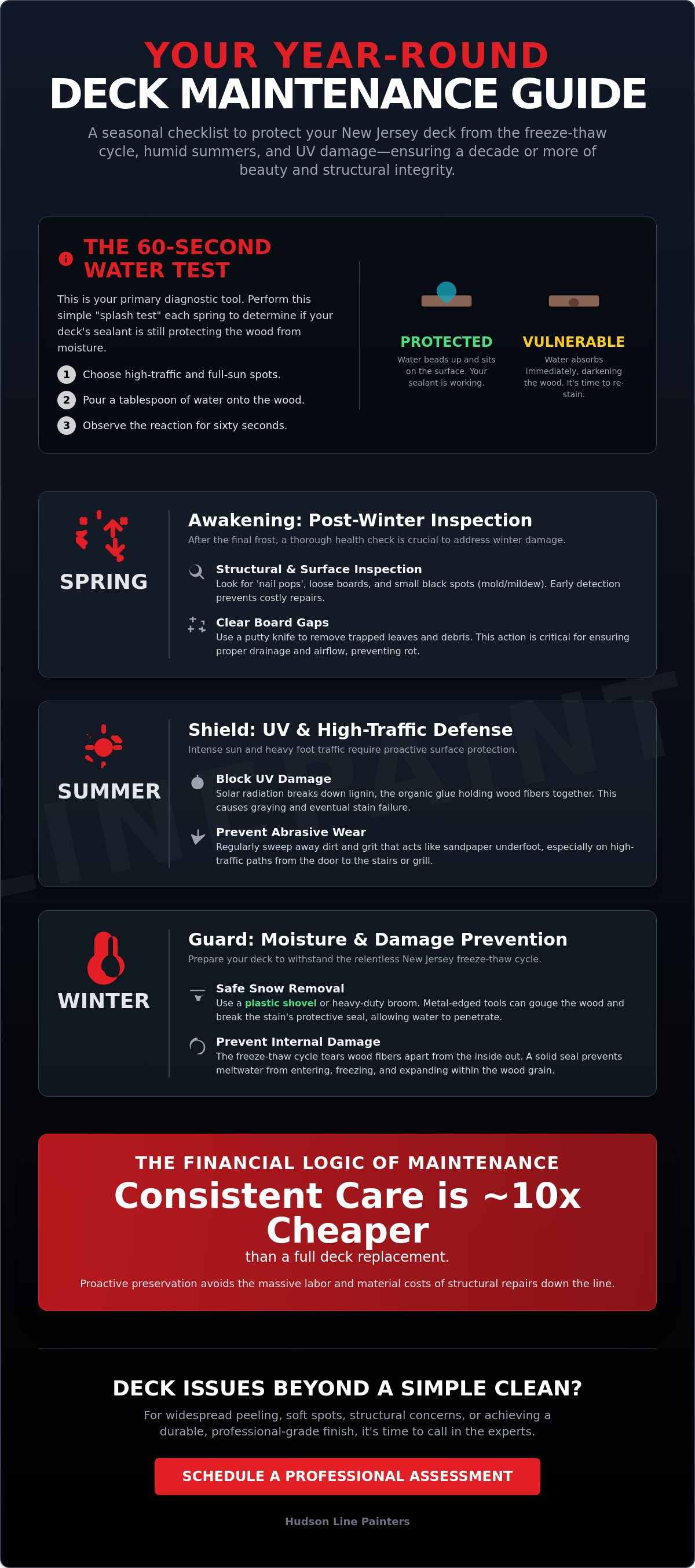
Professional deck maintenance is the strategic intersection of cleaning, inspection, and protection. When you understand how to maintain a stained deck, you are essentially managing a biological battle against the elements. Solar radiation is your primary adversary. Ultraviolet (UV) rays strike the wood surface and break down lignin, which is the organic polymer that holds wood fibers together. As lignin degrades, the wood becomes "grayed" and brittle, causing your deck stain to lose its physical bond. Without this structural integrity, the stain simply flakes away and leaves the substrate vulnerable to moisture and rot.
Adopting a rigorous preventative framework, which we call the "Hudson Line Standard," ensures your deck remains a durable asset rather than a liability. This disciplined approach focuses on stopping damage before it requires a total overhaul. From a pragmatic perspective, the financial logic is undeniable. Consistent maintenance is approximately ten times cheaper than a full deck replacement. By investing in wood preservation through routine care, you avoid the massive labor and material costs associated with tearing out structural beams and joists later.
The Science of the NJ Freeze-Thaw Cycle
New Jersey homeowners face a unique challenge during the winter months. Moisture trapped within the microscopic pores of the wood expands as it freezes. This internal pressure can literally tear wood fibers apart from the inside out. This is why we prioritize "breathable" stains that allow internal moisture to escape as vapor while blocking liquid water from entering. Snow accumulation further complicates the process. A heavy snowpack sits on your deck for weeks, creating a constant source of moisture that accelerates stain degradation through prolonged saturation and pressure.
The Water Test: Your Primary Diagnostic Tool
You don't need expensive equipment to check your deck’s health. The "splash test" is a simple, effective way to determine if your sealant is still performing. Follow these steps to get an accurate reading of your deck's condition:
Choose several high-traffic areas and a few spots that receive full sun exposure.
Pour a small amount of water (about a tablespoon) onto the wood surface.
Observe the reaction for sixty seconds.
If the water beads up and sits on top, your protection is intact. If the water absorbs immediately and darkens the wood, the fibers are thirsty and unprotected. The water test is the industry standard for checking sealant integrity and should be performed at the start of every spring season to ensure your deck is ready for the humid Jersey summer.
The Essential Seasonal Maintenance Schedule
Maintaining your outdoor living space requires more than a casual sweep. In New Jersey, the transition between seasons puts immense stress on wood fibers. Learning how to maintain a stained deck effectively requires a disciplined, calendar-based approach. This ensures that environmental stressors like high humidity and heavy snow don't lead to premature coating failure. A systematic rhythm of care prevents minor issues from evolving into expensive structural repairs.
Summer brings intense UV exposure and heavy foot traffic from backyard gatherings. During these months, focus on keeping the surface clear of grit and dirt that acts like sandpaper underfoot. High-traffic paths can wear down stain quickly, so periodic cleaning with a mild detergent helps maintain the aesthetic. When winter arrives, the goal shifts to physical protection. Use a plastic shovel or a heavy-duty broom for snow removal rather than metal-tipped tools. Metal edges can gouge the wood and compromise the stain's seal, allowing melt-water to penetrate deep into the grain.
Spring Awakening: The Post-Winter Inspection
Once the final frost passes, your deck needs a thorough health check. Ground shifts during the freeze-thaw cycle often cause "nail pops" or loose boards that present safety hazards. Inspect the entire surface for small black spots. These are early indicators of mold or mildew colonies thriving in the damp spring air. It is vital to clear the gaps between your deck boards using a putty knife or specialized gap tool. Debris trapped in these channels prevents proper drainage and airflow, creating a localized greenhouse effect that rots wood from the sides. For those who find structural issues during this phase, a professional light carpentry assessment can ensure your foundation remains solid before the peak season begins.
Fall Preparation: Guarding Against Winter
September is the most critical month for long-term preservation. According to the USDA guide to finishing wood decks, moisture management is the single most important factor in preventing wood decay. Wet leaves left on the surface through October will trap moisture against the wood, leading to dark stains and localized rot. This organic matter also provides the perfect environment for wood-destroying organisms to take hold.
Before the first freeze hits Northern NJ, perform the water test we discussed in the previous section. If the water fails to bead, apply a thin maintenance coat to restore the protective barrier. Finally, move heavy planters and outdoor furniture to a storage area or onto different sections of the deck. Leaving these items in one spot all winter creates permanent moisture rings and provides a breeding ground for fungi that can eat through even the highest-quality stains.
Advanced Cleaning Techniques for New Jersey Climates
Mastering the technical side of deck sanitation is a prerequisite for longevity. Many homeowners confuse a simple rinse with a deep clean, but these two processes serve very different purposes. A rinse removes surface dust and pollen using a standard garden hose. A deep clean, however, involves chemical emulsification to lift embedded contaminants like mold spores and traffic film. When you are learning how to maintain a stained deck, you must recognize that applying a new coat over a dirty surface is the most common cause of premature peeling.
Homeowners in humid areas like the Passaic Valley or near the Shore often struggle with "The Jersey Green." This persistent layer of algae and lichen thrives in the micro-climates created by NJ’s summer dew. While chlorine bleach is a common retail suggestion for removing this growth, it is a destructive choice for wood fibers. Chlorine strips the natural color and weakens the lignin. We recommend oxygen bleach (sodium percarbonate) instead. It effectively kills organic growth and lifts grayed wood cells without damaging the structural integrity of the boards.
The Dangers of Improper Power Washing
High-pressure settings are the enemy of a beautiful finish. Using excessive PSI can "fuzz" the wood surface by blowing out the soft grain, which creates a splintered texture that is impossible to stain evenly. We utilize a "Soft Wash" method that relies on specialized cleaning solutions to do the heavy lifting. This allows for a low-pressure rinse that protects the wood while still achieving a pristine result. If your deck has years of buildup, investing in professional power washing ensures the substrate is prepared correctly without the risk of permanent scarring.
Choosing the Right Cleaning Solution
The chemistry of your cleaner matters as much as the application. For New Jersey gardens, we prioritize eco-friendly, biodegradable solutions that won't harm your hydrangeas or boxwoods. After using an alkaline cleaner like oxygen bleach, it is vital to use a wood brightener to neutralize the pH level. This acidic step opens the wood pores and darkens the grain, creating the perfect environment for stain adhesion. Properties near the coast require extra attention; salt air leaves a corrosive film that must be thoroughly neutralized and rinsed away to prevent the stain from becoming brittle and cracking within its first year of service.
Troubleshooting Common Deck Stain Issues
Identifying the root cause of surface failure is the most important step in learning how to maintain a stained deck. If you ignore the underlying issue, any new coating will likely fail within six months. One frequent culprit in New Jersey is "tannin bleed," which occurs primarily in cedar or redwood structures. This happens when natural wood oils rise to the surface and react with moisture, creating dark, brownish streaks. Addressing this requires a specialized tannin-blocking primer or a high-quality oil-based stain that can lock these extracts deep within the wood fibers.
Peeling is rarely a sign of a defective product. It is almost always a result of poor surface preparation or over-application. When stain is applied too thickly, it forms a film on top of the wood rather than penetrating the grain. As the wood expands and contracts during the NJ freeze-thaw cycle, this brittle film cracks and flakes away. Similarly, "mill glaze" on new lumber acts as a compressed barrier that prevents stain absorption. If your new deck isn't sanded or chemically treated to remove this glaze, your maintenance efforts will be wasted as the stain simply sits on the surface.
Spot Repairs vs. Full Refinishing
You don't always need to strip your entire deck to fix a few worn areas. High-traffic paths near stairs or sliding doors often fade faster than the rest of the surface. You can "feather in" these spots by using a dry-brush technique to blend new stain into the existing finish. This prevents the formation of "lap marks," which are dark, double-coated lines that occur when wet stain overlaps a dried section. However, we follow the 20% rule. If more than 20% of your deck surface is peeling, cracking, or showing signs of deep graying, spot repairs are no longer a viable solution. At this stage, a full strip and refinish are necessary to restore the structural and aesthetic integrity of the wood.
Hardware and Structural Integrity
Maintenance extends beyond the coating to the metal that holds your deck together. Inspect your joist hangers and ledger boards for hidden rust or corrosion. When fasteners begin to oxidize, they can cause "iron gall" staining. This is a chemical reaction between the iron in the rust and the tannins in the wood that creates permanent black splotches. Replacing rusted screws with stainless steel or high-quality galvanized alternatives is a simple carpentry fix that prevents these stains from ruining your finish. If you're seeing widespread peeling or structural rust, it's time for a professional deck and fence staining consultation to restore your property's value and safety.
When to Call a Professional House Painter for Refinishing
While routine cleaning is a task many homeowners handle, achieving a showroom-quality finish requires industrial precision. Knowing how to maintain a stained deck involves recognizing when the wood's condition has surpassed the limits of a weekend DIY project. Professional teams utilize heavy-duty orbital sanding equipment that levels the wood fibers without leaving the swirl marks common with rental tools. This level of preparation ensures the substrate is perfectly porous and ready to accept a fresh coating that won't peel after its first season.
Timing is the most significant hurdle for any New Jersey exterior project. Our local climate offers narrow windows of ideal temperature and humidity, often lasting only a few days between rain cycles. A professional crew has the manpower to execute a full strip, sand, and stain within these precise windows. We also provide access to commercial-grade resins and pigments that offer superior UV blockage compared to standard retail products. These high-solids formulas are specifically engineered to withstand the intense thermal expansion seen in the Garden State.
The Hudson Line Painters Advantage
Our approach is rooted in a meticulous multi-step preparation process. We don't just apply product; we analyze the wood's age and porosity to determine the ideal stain opacity for your specific environment. For older wood with significant character, a solid or semi-solid stain provides necessary protection, while newer boards might benefit from a transparent finish. If you're searching for deck stainers near me, our team brings the technical expertise required to navigate these choices safely. We handle all chemical neutralizers and VOC-compliant materials with strict adherence to environmental safety and proper disposal protocols.
Protecting Your Investment
Hiring a professional house painter for your refinishing needs is a strategic financial decision. While the upfront cost is higher than a bucket of retail stain, the extended lifespan of the finish provides a much higher return on investment. A professionally maintained deck can look new for over a decade, effectively doubling the life of the lumber. Most importantly, professional maintenance prevents the $15,000+ cost of deck replacement. By partnering with a disciplined craftsman, you gain the peace of mind that comes from a guaranteed transformation and a structure that remains safe for your family for years to come.
Secure Your Deck’s Future for 2026 and Beyond
Your deck is a significant investment that deserves more than a reactive approach. Mastering how to maintain a stained deck requires a disciplined seasonal rhythm and a technical understanding of New Jersey's environmental stressors. By choosing oxygen-based cleaners over destructive chlorine and performing annual water tests, you can effectively extend the life of your wood while avoiding the massive expense of a full structural replacement. Consistent care ensures your outdoor space remains a source of pride rather than a maintenance burden.
Since 2018, Hudson Line Painters has helped homeowners across Hudson, Union, and Bergen Counties navigate these climate-specific challenges. We bring a craftsman’s eye and meticulous site discipline to every project, ensuring your finish is both beautiful and resilient. Our team provides the professional-grade results and technical precision that big-box products simply cannot match. Don't let another harsh winter compromise your home's value or structural integrity. Get a Free Estimate from Hudson Line Painters Today and secure a deck that looks pristine for years to come. Your perfect outdoor retreat is just one professional treatment away.
Frequently Asked Questions
How often should I clean my stained deck in New Jersey?
You should perform a thorough cleaning at least twice a year, specifically during the spring and fall. Spring cleaning is essential for removing winter salt and grime that can abrade the finish. A dedicated fall cleaning clears away organic debris like wet leaves, which trap moisture and create a breeding ground for wood-destroying fungi before the first freeze.
Can I use a pressure washer on my stained deck myself?
You can use a pressure washer, but it's risky because high-pressure settings often cause "fuzzing" or permanent gouging in wood fibers. Most rental units provide far more PSI than a wood surface can safely handle. A garden hose with a specialized nozzle or a professional soft wash is a much safer alternative for preserving the integrity of your stain.
What is the best time of year to re-stain a deck in NJ?
Late spring and early fall are the ideal windows for staining when temperatures consistently stay between 50 and 80 degrees Fahrenheit. You need a period of 48 hours without rain for the product to cure correctly. Avoid the peak humidity of July and August, as excessive moisture in the air can interfere with the stain's ability to bond with the wood.
Why is my deck stain peeling after only one year?
Peeling usually occurs because of poor surface preparation or applying the product too thickly. If the wood was damp during application or if "mill glaze" wasn't sanded away, the stain cannot penetrate the grain. Learning how to maintain a stained deck correctly reveals that penetration is the most critical factor for long-term adhesion and resistance to the freeze-thaw cycle.
Is it better to use oil-based or water-based stain for NJ weather?
Water-based stains are the modern standard for New Jersey, especially with the strict VOC regulations taking effect on August 18, 2026. These formulas offer excellent breathability and UV protection, which is vital for our humid summers. While oil-based stains provide deep penetration, they often require more frequent maintenance and may not comply with the newest environmental standards.
How do I remove mold from my deck without ruining the stain?
Use an oxygen-based bleach solution rather than harsh chlorine bleach to kill mold spores safely. Mix sodium percarbonate with water and apply it using a soft-bristle brush to lift the organic growth. This method effectively cleans the surface without stripping the natural wood color or weakening the lignin that holds the wood fibers together.
What happens if I don’t maintain my stained deck?
Neglect leads to rapid structural degradation, including rot, splintering, and warped boards. Without a protective seal, UV rays break down the wood's natural binders, causing it to turn gray and brittle. Moisture then enters these cracks and expands during winter freezes, which can eventually lead to a total structural failure requiring an expensive replacement.
How much does it cost for a professional to maintain my deck?
The cost depends on your deck’s square footage, its current condition, and the amount of preparation work required. Professional service typically includes deep cleaning, sanding, and a precision application of high-grade stain. While DIY materials are cheaper upfront, professional maintenance is a smart financial choice because it prevents the $15,000+ cost of a full deck replacement.


Comments