
Kitchen Cabinet Refinishing vs. Replacement: The 2026 NJ Homeowner’s Comparison Guide
- dlopez784
- May 17
- 12 min read
You might think a complete tear-out is the only way to escape those heavy, dated oak cabinets, but the most sophisticated kitchen transformation in 2026 doesn't actually involve a sledgehammer. It's a common misconception that replacement is the only path to a high-end look. We understand the frustration of living with a kitchen that feels dark and cramped, especially when you're worried about the mess of a full renovation or the risk of a DIY paint job that peels within months.
This guide will show you how to achieve a factory-smooth, durable aesthetic through professional kitchen cabinet refinishing while saving you from the long timelines of a traditional replacement. With New Jersey median home prices reaching $531,000 this year, making smart, high-impact improvements is more important than ever for local homeowners. We'll compare the longevity, modern color trends like sage green and warm terracotta, and the practical ROI of refinishing versus other popular remodeling options. By the end, you'll know exactly how to secure a modern kitchen aesthetic on a manageable budget with minimal disruption to your home life.
Key Takeaways
Learn why professional kitchen cabinet refinishing offers a superior financial return compared to replacement by utilizing your existing high-quality cabinet "bones."
Discover the critical differences between industrial factory-grade coatings and standard latex paint to ensure your new aesthetic actually lasts.
Understand how advanced HVLP spraying techniques create a durable, moisture-resistant barrier that can withstand the specific demands of the New Jersey climate.
Evaluate your kitchen’s potential using our candidate checklist, which covers everything from wood species to the integrity of your drawer glides.
Gain peace of mind by reviewing a transparent, step-by-step refinishing process designed to minimize household disruption and maximize site cleanliness.
Table of Contents
Kitchen Cabinet Refinishing vs. Replacement: Analyzing the Real ROI
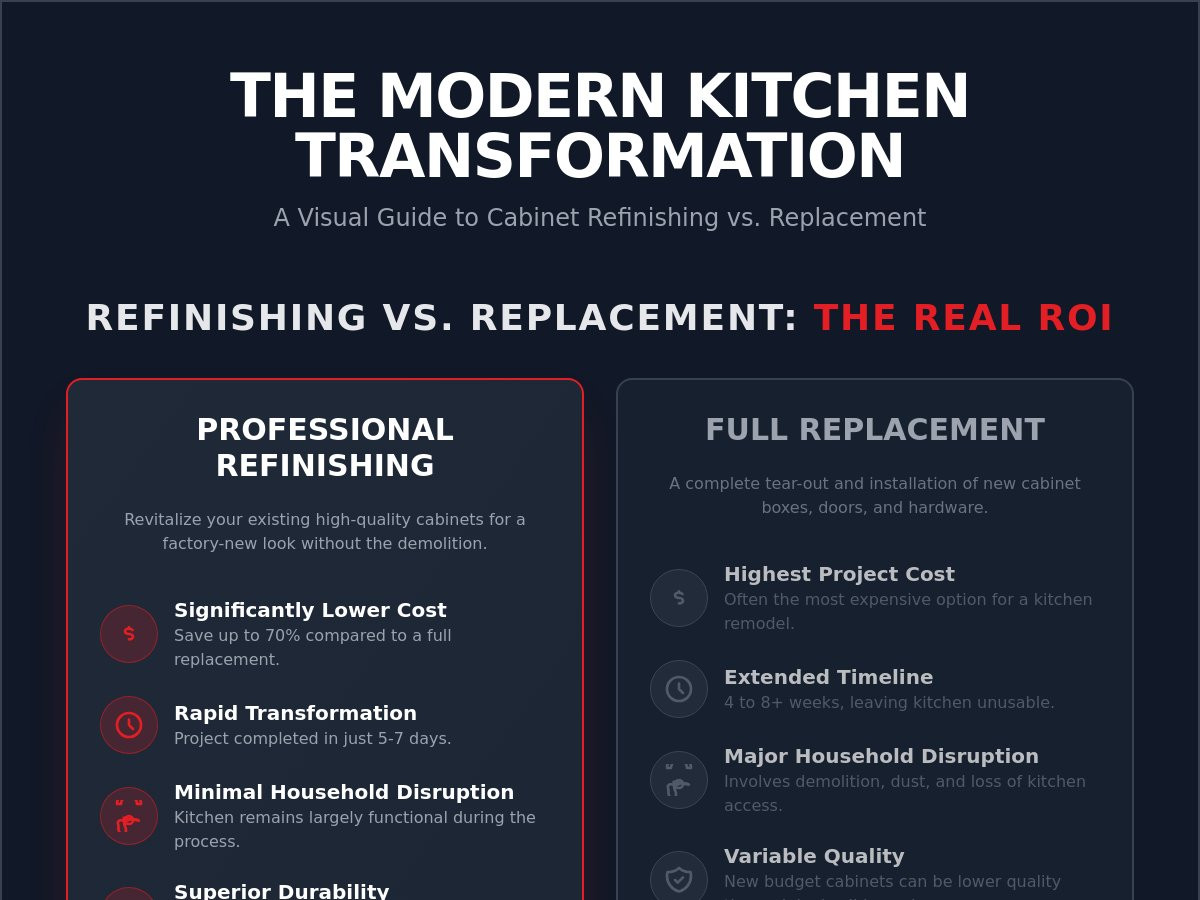
Deciding between a full demolition and a strategic update often comes down to a single question of value. In a competitive market where the median New Jersey home price reached $531,000 in February 2026, homeowners are looking for ways to maximize equity without overcapitalizing. Professional kitchen cabinet refinishing offers a sophisticated alternative to the high costs and long lead times of a full remodel. While a complete replacement involves tearing out existing structures and starting from scratch, refinishing focuses on revitalizing the high-quality materials already present in your home.
The viability of this approach depends entirely on the structural integrity of your current setup. We look at the "bones" of the unit first. If your cabinets feature solid wood frames or high-grade plywood, they are often superior in quality to modern, budget-friendly replacement options. Understanding Cabinetry construction basics helps identify which units can handle a professional chemical transformation. Beyond the financial ROI, there's a significant environmental benefit to this choice. By choosing to restore rather than replace, you're keeping hundreds of pounds of perfectly functional wood out of New Jersey landfills, making it a sustainable choice for the eco-conscious homeowner.
When Replacement is the Only Option
There are instances where a fresh start is unavoidable. If you've discovered extensive water damage or wood rot in your base cabinets, the structural foundation is compromised. Similarly, if your current kitchen footprint no longer serves your needs, a layout change requires new cabinetry. For homes built before 1978, we also suggest checking for lead paint; those surfaces require specific safety protocols that may influence your project scope. We always prioritize your home's safety and functional integrity before recommending an aesthetic update.
The Financial Advantage of Refinishing
Choosing kitchen cabinet refinishing allows you to redirect your renovation budget toward high-impact upgrades like premium stone countertops or professional-grade appliances. The timeline difference is equally stark. A full replacement can leave your kitchen unusable for 4 to 8 weeks, whereas professional refinishing typically concludes in just 5 to 7 days. This efficiency minimizes household stress while delivering a result that looks indistinguishable from brand-new cabinetry. For those planning a broader home update, coordinating these efforts with Professional Home Painting Services ensures a cohesive, high-end finish throughout your living space.
Comparing the Methods: Refinishing, Painting, and Refacing
Understanding the technical differences between refinishing, painting, and refacing is the first step toward a successful kitchen transformation. Many homeowners use these terms interchangeably, but the results vary wildly in terms of longevity and feel. Professional kitchen cabinet refinishing is a precise chemical process that involves stripping the old finish and applying factory-grade coatings. This is a far cry from a simple "paint job," which often fails in the high-heat, high-moisture environment of a busy kitchen. Choosing the right method depends on your structural goals, your aesthetic desires, and your long-term budget.
Refinishing vs. Standard Painting
The "painting" pitfall is a common trap for those looking for a quick fix. Standard latex or acrylic paints designed for walls lack the chemical cross-linking required to resist hand oils, steam, and frequent cleaning. Our refinishing process utilizes industrial-grade coatings that create a permanent chemical bond with the wood. Surface preparation is the most critical stage. While a standard painter might simply clean the surface, we perform a deep de-glossing and mechanical sanding to ensure total adhesion. This meticulous care results in a smooth, factory finish that is completely free of visible brush strokes or roller textures. If you want a finish that feels as smooth as it looks, it's best to consult with a specialist who understands these technical requirements.
Is Refacing Worth the Extra Cost?
Refacing serves as a middle ground between refinishing and a full replacement. In this process, you keep the existing cabinet boxes but replace all the doors and drawer fronts with new ones. This is a viable option if you want to change your door style entirely, such as switching from a dated arch to a modern Shaker profile. However, this customization comes with a premium price tag. According to a recent Cost Vs. Value Report, refacing can often cost twice as much as a professional refinishing project while offering similar durability.
For most New Jersey homeowners, refinishing provides 80% of the aesthetic impact of a full remodel for a fraction of the investment. It allows you to keep your high-quality cabinetry frames while achieving a modern, saturated color palette. You can explore the specific technical steps of our process in The Complete Guide to Cabinet Refinishing. By focusing on high-performance coatings rather than new hardware, you maximize your ROI without sacrificing the "new kitchen" feel.
The Durability Debate: Why Professional Finishes Outlast DIY
The number one fear homeowners share regarding kitchen cabinet refinishing is the risk of chipping or peeling. This concern is valid when considering standard DIY kits or house paint, which aren't formulated for the high-traffic demands of a kitchen. Professional durability is the result of a high-performance chemical transformation. We utilize High Volume Low Pressure (HVLP) spraying technology to apply coatings at a precise, uniform thickness. Unlike brushes or rollers that leave uneven layers and microscopic air bubbles, HVLP systems create a cohesive film that resists the daily impact of pots, pans, and fingernails.
New Jersey’s humid summers present a unique challenge for cabinetry finishes. High moisture levels in the air can cause standard latex paints to remain soft or "tack," leading to a phenomenon called blocking where doors stick to the frames. Our industrial coatings are engineered to be hydrophobic and vapor-impermeable. This means they handle the steam from your dishwasher and the heavy humidity of July without softening. These finishes also provide a robust barrier against hand oils, cooking grease, and harsh cleaning agents that typically break down residential-grade trim paints over time.
The Role of Industrial Primers
Preparation goes far beyond simple cleaning. Many New Jersey kitchens feature older oak or cherry cabinets, which are prone to tannin bleed. Without the right barrier, these natural wood oils will seep through the finish, causing yellow or brown stains to appear on your new white or cream surfaces. We use specialized tannin-blocking primers that seal the wood grain completely. These primers also act as an adhesion promoter, creating a permanent mechanical bond between the raw wood and the topcoat. Industrial primers serve as the essential chemical foundation that prevents peeling and ensures long-term coating integrity.
Curing vs. Drying
It's vital to distinguish between a finish that is "dry to the touch" and one that is fully cured. While a surface might feel dry within an hour, a full chemical cure takes several days to reach its maximum Shore D hardness. We manage this process through strict climate control and the use of specialized drying racks for all doors and drawer fronts. This ensures that every piece cures in a dust-free environment with consistent airflow. By the time we reinstall your cabinetry, the finish has reached a level of durability that allows you to resume heavy kitchen use with total peace of mind. Our disciplined approach to the curing phase is what separates a temporary cosmetic fix from a long-term home improvement.
Is Your Kitchen a Candidate for Refinishing? A Homeowner’s Checklist
Before committing to a transformation, a thorough evaluation of your current kitchen is essential. Not every set of cabinets is a prime candidate for professional kitchen cabinet refinishing, though most high-quality New Jersey homes built in the last thirty years feature excellent foundational materials. The ideal candidate loves their current kitchen layout but feels the aesthetic is dated or the finish is failing. If your "work triangle" between the sink, stove, and refrigerator functions perfectly, you are already halfway to a successful project. However, if you find yourself constantly frustrated by a lack of counter space or a cramped floor plan, a full renovation might be the more appropriate, albeit more expensive, path.
Assessing Wood Quality
The species of wood in your kitchen dictates the final look of your refinished cabinets. Oak remains a staple in many local homes; it is prized for its durability but features a deep, porous grain. When refinishing oak, you must decide if you want that natural texture to remain visible or if you prefer a "grain fill" process for a smoother surface. Maple and birch are the gold standards for a contemporary painted look because their closed-grain structure allows for a perfectly flat, factory-style finish. If you have thermofoil or laminate surfaces, don't lose hope. While these non-wood materials require specialized bonding primers and meticulous mechanical sanding to ensure adhesion, they can be successfully revitalized by a skilled craftsman who understands the technical requirements of synthetic substrates.
Functional Upgrades
Aesthetics are only half the battle. We recommend a close inspection of your hardware and "moving parts" before the project begins. Are your drawer glides sticking, or do your doors hang slightly crooked? Refinishing provides the perfect window to perform light carpentry and functional improvements. Many of our clients choose to upgrade to soft-close hinges or modern undermount glides during the process. These small mechanical changes, combined with new pulls and knobs, provide the tactile experience of a brand-new kitchen. If your cabinet boxes are structurally sound but the doors are sagging, we can often address these issues through precise adjustments or minor repairs. To see if your specific cabinetry meets these criteria, you can request a professional assessment from our team.
Budget alignment is the final piece of the checklist. While refinishing is significantly more cost-effective than replacement, it is still a premium service that requires industrial equipment and skilled labor. You should ensure your expectations for a factory-smooth result align with the meticulous preparation and multi-stage coating process required. By checking off these boxes, you ensure that your investment adds genuine, long-term value to your home.
The Hudson Line Standard: Our Precision Refinishing Process
We believe that a professional transformation is only as good as the discipline behind the preparation. Our kitchen cabinet refinishing process is built on a proprietary procedural framework that ensures every square inch of your cabinetry receives the same level of technical care. We don't just show up and start spraying; we follow a logical, sequential lifecycle that begins with a deep consultation and ends with a meticulous final walkthrough. This transparency allows you to see exactly how your investment is being protected at every stage of the project.
To achieve a true factory-grade result, we separate the transformation into two distinct phases. Your cabinet doors and drawer fronts are carefully labeled and transported to our specialized off-site shop. In this controlled environment, we apply industrial coatings with absolute precision, free from the variables of a residential setting like dust or pet hair. You can explore Cabinet Refinishing to see examples of how these off-site shop finishes compare to standard on-site painting. Meanwhile, we handle the cabinet frames on-site using the same high-performance HVLP technology. This hybrid approach minimizes the time we spend in your home while maximizing the quality and longevity of the final result.
Meticulous Site Preparation
Protecting your home environment is our first priority. We employ a "Clean Room" approach that goes far beyond simple drop cloths. Our team uses a triple-masking technique to completely seal off your floors, appliances, and ceilings from any potential overspray. We also establish strict ventilation protocols by using industrial-grade air scrubbers and exhaust systems. These systems manage air quality and safety throughout the spray phase, ensuring that the only thing receiving a new finish is your cabinetry. This disciplined site etiquette leaves the rest of your home pristine and functional throughout the process.
Why Hudson County Homeowners Trust Us
New Jersey residential properties often present unique architectural challenges, from historic layouts to modern open-concept spaces. Our local expertise allows us to navigate these complexities with the discipline of a seasoned craftsman. We respect your schedule and your environment, maintaining a clean and organized site from start to finish. Once the project is complete, we conduct a joint final walkthrough to ensure every detail meets our rigorous standards for meticulous craftsmanship and your complete satisfaction. Ready to see the difference for yourself? Schedule your free kitchen cabinet refinishing estimate today!
Achieve a Designer Look Without the Renovation Stress
Deciding to revitalize your home is a significant investment in your lifestyle and property value. Professional kitchen cabinet refinishing stands out as the most practical choice for homeowners who value high-end results and operational efficiency. By choosing this path, you avoid the waste of a full tear-out while securing a factory-smooth finish that outlasts standard DIY attempts. Our process ensures your kitchen remains the heart of your home, updated with the saturated colors and matte finishes currently trending in the New Jersey market.
With over 100+ NJ kitchens transformed, our fully licensed and insured local craftsmen bring a level of technical precision that only comes with experience. We utilize factory-grade HVLP spray finishes to guarantee a result that resists oils, grease, and moisture for years to come. We're proud to offer a transparent, systematic service that respects both your environment and your schedule. You don't have to settle for dated cabinetry when a craftsman-level transformation is within reach.
Request Your Free Cabinet Refinishing Quote today to discover how we can help you fall in love with your kitchen all over again.
Frequently Asked Questions
How long does professional kitchen cabinet refinishing typically take?
Professional kitchen cabinet refinishing typically takes between 5 and 7 business days to complete. This timeline is significantly shorter than the 4 to 8 weeks required for a full kitchen replacement. We prioritize a structured schedule that minimizes the time your kitchen is out of commission. Most of the heavy labor occurs off-site in our specialized shop, ensuring your home life remains as normal as possible during the transformation.
Will the finish smell or create toxic fumes in my home?
Our process utilizes low-VOC industrial coatings and advanced ventilation protocols to manage air quality. We establish a "Clean Room" environment using industrial air scrubbers and exhaust systems that vent air directly outside. While a faint scent may be present during the application phase, it dissipates rapidly once the coatings are dry. We prioritize your family's safety and comfort by maintaining a strictly controlled environment throughout the spray phase.
Can you refinish cabinets that have already been painted or stained?
Yes, we can successfully refinish cabinets that currently have a layer of paint or an old stain. The key is our meticulous preparation phase, which involves stripping away failing finishes and performing mechanical sanding to reach the raw substrate. This ensures that our industrial primers can create a permanent chemical bond with the wood. We evaluate the current surface during our initial inspection to determine the specific preparation steps required.
What is the difference between cabinet painting and cabinet refinishing?
The primary difference lies in the materials and the bond. Cabinet painting usually involves applying a standard latex or acrylic layer over the surface, which is prone to peeling. In contrast, kitchen cabinet refinishing is a high-performance chemical transformation using industrial-grade coatings and HVLP technology. This results in a factory-smooth finish that handles moisture, heat, and daily wear much better than residential trim paint ever could.
How do I clean and maintain my newly refinished cabinets?
You should clean your newly refinished surfaces with a soft microfiber cloth and a mild solution of soap and water. It's important to avoid abrasive sponges or harsh chemical cleaners that can degrade the topcoat over time. Because our finishes reach a high Shore D hardness once fully cured, they are naturally resistant to grease and hand oils. Regular, gentle wiping is all that's needed to maintain the factory-fresh aesthetic for years.
Do I need to empty my cabinets before the refinishing process begins?
We require homeowners to empty all cabinet boxes and drawers before our team arrives on-site. This ensures that your kitchenware remains free from dust and allows our craftsmen total access to the frames for masking and spraying. While we use triple-masking to protect your home's interior, removing items prevents any accidental contact with the industrial coatings. Having a clear workspace also helps us maintain our efficient project timeline.
Is it possible to change the color of my cabinets from dark to light?
You can absolutely transition your cabinetry from a dark wood tone to a bright, modern light color. We achieve this by applying specialized tannin-blocking primers that prevent the natural oils in dark woods like cherry or oak from bleeding through the new finish. This chemical barrier ensures your light-colored cabinets stay crisp and vibrant without yellowing. It's one of the most effective ways to brighten a dated, dark kitchen space.
What kind of warranty or guarantee do you offer on cabinet finishes?
Homeowners should always check with their contractor regarding specific warranty periods and what those guarantees cover. A professional service usually stands behind the adhesion and durability of their coatings under normal usage conditions. We recommend asking for a written contract that outlines the scope of the work and any post-project support. This transparency is a hallmark of a reliable professional who is confident in their meticulous craftsmanship and technical process.


Comments